
LEARN A LITTLE:

Everywhere We Go We Take Ourselves With
Recently I was talking with a young man whose dad suggested that he talk with me about his frustrations with being overlooked several times for promotions at his place of employment—a very large managed care organization. His father and I have been friends for many years.
What first struck me about the young man was the intensity of his feelings, mostly anger, frustration, and disappointment. There seemed to be a cynical edge about him and he seemed reluctant to engage in any conversation regarding the culture or dynamics of the organization. His unhappiness was self-evident. I wondered if it showed through at work as well.
It wasn’t easy to draw him out to gain other insights into his behavior or life experiences. I wondered if other decision makers saw him as being ready for more responsibility.
I asked if he had talked with his supervisor regarding promotional pathways. He had not because he thought the gentleman did not like him. He added the fact that the job was quite boring and therefore less than enjoyable.
Being curious I asked how he thought he came across to his boss and fellow employees. He was, however, hesitant to engage in conversation regarding this line of thought as well.
Not giving up yet, I asked if he made suggestions on occasion, offered to help others on projects or initiatives, came to work on time and/or late when needed? His delayed response was, “They don’t pay me sufficiently right now. Why should I work extra hours to help them out?”
I then asked him if he thought “promotions” should be earned or to some extent be a reward for demonstrating the ability to handle additional responsibility. “Not at this place,” he responded. “People get promoted here because of who they know or who they snow.”
I made a softer suggestion, perhaps approach his boss at the right time— and share a thought such as “I would like to grow here. Could you give me feedback regarding what I am doing well, where I might be falling short and what you think I need to demonstrate to be considered for advancement?” His response was one of skepticism and disengagement.
Finally, I asked gently if it would be helpful to talk about his philosophy of life, important values, personality, strengths, and weaknesses. “Not really,” he said. I then asked if there might be another fellow employee in the organization that could serve as a mentor to him, someone he could explore ideas with. Once again, the answer was “No”.
I told him, “I know a few individuals who worked with people around career planning and even life planning.” “If that should be interesting to you, I said, “Just give me a call and I will give you their contact information”. It seemed our conversation was coming to an end. “I sure appreciate you talking with me, I just need to find another job”, he said.
The first thing that went through my mind after the meeting was “It’s too bad that everywhere he goes, he will take himself with.” I did not feel good about the meeting. While I worked at it, I didn’t feel like I had broken through to him. I also had made a couple of book suggestions for him to consider.
Personally, I believe he would benefit from coaching/counseling, it seemed as if his emotions were shaping much of his perceptions.
Having met the young man and after interacting with him, I do believe he can adjust his life course if he so desires and be successful but some things will have to change.
Everywhere he goes, he will enter another human system, with its own bosses, leaders, incentives, relationships, inequities and opportunities. His task is to understand both himself and the system clearly enough to act with agency and personal responsibility.
Until next time,
Art Dykstra
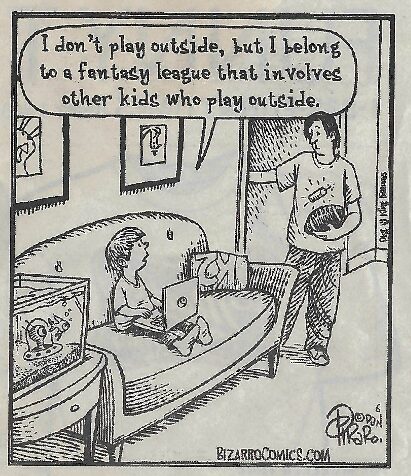
LAUGH A LITTLE:

REFLECT A LITTLE:

Proverbs 14:6
A scoffer seeks wisdom, and doesn’t find it,
but knowledge comes easily to a discerning person.
READ A LITTLE:


What’s the Point?
Tom Rath
(Silicon Guild, 2026)
I have always enjoyed reading Tom Rath’s books, and this one, What’s the Point, is no exception. It is engaging, inspiring, and packed with insights and thoughts to ponder.
The book is divided into four parts:
Part I: Building an Other-Directed Life
Part II: Making Purpose Plural
Part III: Leaving a Lasting Impact
Part IV: The Purpose Profiles
As you will note in the highlights shared below, the first three parts of the book are invaluable and offer practical guidance for living. Part IV was interesting to look through but from my perspective not as helpful as it was intended. Many of the job titles have much more variance than what is indicated, and the “annual potential contribution” numbers seem manufactured.
What’s the Point? is essentially about purpose and putting others before ourselves as the author indicates in the introduction. The book is intended to help people make better choices and live a life worth living. What follows are some selected insights:
Part I
- “Purpose drives performance in ways passion never could.” Meaning comes through contribution.
- “Start asking who you can help.”
- “When you connect your work to a purpose bigger than yourself, you don’t just survive the workweek. You crush it.”
- “Researchers studying childhood aspirations found that parental desires for their children’s future influence outcomes more than the child’s own stated preferences.”
- “Nothing is more influential than helping someone spot a hidden talent and encouraging them to pursue it.”
- “The more time you spend chasing happiness, the less likely you are to find it.”
- “People with the highest levels of wellbeing aren’t those who focus on improving their own happiness. They are those who focus on improving other people’s happiness.”
- “It is the pursuit of meaning, not happiness, that makes life worth living.”
- “Happiness is a fleeting byproduct; meaning is the robust foundation you construct through service.”
- “Focusing on others’ needs may be the most effective way to change ourselves.”
- “Most people, without realizing it, float downstream, occasionally paddling to avoid obvious rocks but fundamentally surrendering to wherever the water takes them.”
- “There’s a profound difference between going with the flow and finding your flow.”
Note: This deserves to be read again.
- “The more you see your impact on others, the more energy you find to overcome obstacles.”
Part II
- “Jobs that make us miserable are measurably worse for our health than unemployment.”
- “The ultimate career metric was never meant to be the height of your personal achievement. Rather, it’s the wake of wellbeing you leave behind.”
- “Stop waiting for the perfect job to deliver purpose. Transform your current role by deliberately crafting your tasks toward higher impact, investing in energizing relationships, and actively tracing how your daily work improves real human lives.”
- Chapter 11 in the book, entitled “From Spectator to Creator” deserves special attention. In it, Rath discusses wasted potential, consumption addictions, some specific neuroscience findings, and the need to restore creativity.
- “Your smartphone is the single greatest threat to your purpose.”
- “You are the sum of people you spend the most time with.”
- “Negativity spreads through social networks five times faster than positivity.”
- “The most dangerous words in any language aren’t profanities or threats. They are ‘I know.’”
- “When you operate from certainty, you don’t process new information; you process confirmation of what you already believe, discarding anything that threatens your comfortable conclusions.”
Part III
- “Your legacy isn’t measurement by award and artifacts, but by impact.”
- “You don’t need a leadership role to help others grow. Some of the most meaningful contributions happen through small, everyday interactions.”
- “Greater purpose in life correlates with reduced mortality risk.”
- “When you truly grasp that your time is finite and could end without warning, every choice becomes clearer…. You stop asking, ‘What if I fail?’ and start asking, ‘What if I never try?’”