
LEARN A LITTLE:

Why Not Give Someone a Warm Shoulder Today?
This has been a brutal winter. Here in Northern Illinois, we have had near record snowfall, ice storms, frigid days and nights, and many consecutive days where the temperature didn’t get above freezing.
Cold is on employee’s minds. It is in this context that this month’s blog came into being. I was having lunch with several friends at a popular local restaurant. While we were chatting away, a person unfamiliar to me came up to our table and greeted one of our group members. I was taken aback by his response. He literally turned from the person—enough to notice— and although he said hello, he initiated a separate conversation with another person at the table. The wayfarer seemed taken aback, paused awkwardly, and left the table.
There was a short, telling silence among our group. I couldn’t stop myself and remarked, “Well, you certainly gave him the cold shoulder.”
“Yes,” he said. “I don’t care much for him.”
It was clear that all of us at lunch that day were uncomfortable. It was not how we as feeling creatures want to be treated.
I thought about the exchange all the way back to my office, including the self-observation that I had used an expression we do not often hear anymore. That thought made me curious, so I googled the idiom to discover what I could about its origins and meaning. It seems that most people attribute the phrase “give the cold shoulder” to Sir Walter Scott in the early 1800’s. “I must tip him the cold shoulder, or he will be pestering me eternally.” (Note: Check out the origin—it’s interesting.)
What’s key in the meaning is its intentionality. It is not the result of accidental inattention. At the core, there are many expressions or language synonyms, such as snub, ignore, chilly treatment, be unfriendly, not saying hi when you see someone, pretending not to see someone, being dismissive, rebuff, etc.
My guess is that the very cold temperature combined with the cold shoulder phrase caused me to have the following thought, “Why can’t we give people a warm shoulder?” By the way, I am not suggesting that we invite every stranger over to our table for dinner.
All of us appreciate eye contact, a warm smile, a friendly wave—being recognized. To be sure, there are people around us who are overly aggressive or socially inappropriate, who at times behave as though their interpersonal radar screens were turned off or broken. But that’s not an excuse for us to be unkind or uncompassionate.
Until next time,
Art Dysktra
LAUGH A LITTLE:

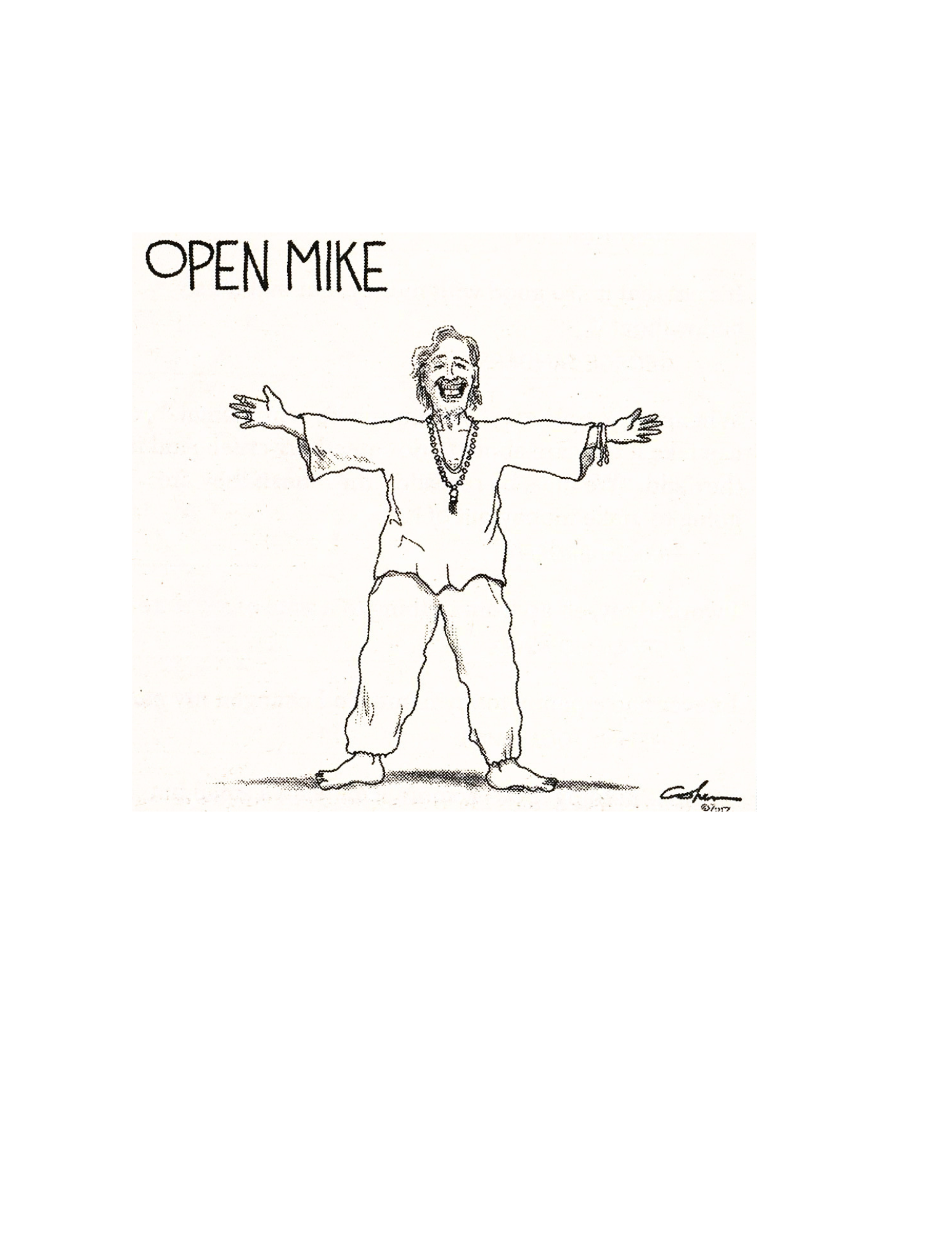
REFLECT A LITTLE:

Proverbs 3:13
Joyful is the person who finds wisdom, the one who gains understanding.
READ A LITTLE:


Shaping a Winning Team: A Leader’s Guide to Hiring, Assessing, and Developing the People You Need to Succeed
Paul Fayad and Chak Fu Lam
(Amplify Publishing, 2024)
As the name of the book suggests, Shaping a Winning Team will most likely resonate more with those who are leaders and active in teams than those working on a more individual or professional level. The authors are the cofounders of Positive Leaders, LLC. Fayad is an accomplished organizational executive, who is a well-known consultant and speaker. Lam is a professor of management at City University of Hong Kong and is an associate editor for the Academy of Management Review.
What motivated me to buy the book was its emphasis on positive leadership, the importance of relationships and the interplay of personalities and behavior. Its foundational analogy is that organizations can be seen as rowboats. The behavior of employees is described in terms of fulfilling the roles of rowers, sitters or drillers. This is the essence of Part 1 of the book.
The analogy works because it’s easy to understand and underscores the importance of moving forward to a destination. The encapsulated idea is “Rowers are highly motivated employees who take pride in getting the job done. They row! While doing this, they also bring positive energy that translates into getting along with others and inspiring them.
Sitters, on the other hand, tend to do only what is minimally expected of them and can be swayed to take on traits of a rower or driller, whichever is more dominant. Drillers are negative energy people, who find faults in how things are done, managed and processed. While they may have exceptional skills on paper, they don’t always employ them in their work, choosing instead to grumble and cause moderate to serious disruption in the workplace. While others are rowing, or at least not hindering progress, the drillers are in the back of the boat, drilling a hole in the bottom to sink it.”
The rowers are the heroes of the boat and of the book, according to the authors. They are few in number, are always energized and positive, have a great attitude, and are driven to excellence. Furthermore, they are those who want to get things done while being highly empathetic and compassionate. They also excel at self-awareness and are able to put the needs of others before themselves.
The sitters make up the majority of organizational employees, “They are your average workers, who do just enough to get things done and keep their job. They rarely exceed your expectations and never lead the group to higher ground.” They are generally likeable and prefer things as they are. “They sit and wait, and they don’t rock the boat.”
While I recommend the book and found many of the insights helpful, I would offer the idea that there are many organizational “sitters,” who actually row quite a bit each day regardless of what are they are doing, nor do they drill just because others in the boat are drilling.
The drillers are the problem employees, very different from the rowers. Such individuals tend to be self-centered, creating a negative culture and work environment. They tend to be cynical or sarcastic individuals, who frequently engage in gossip and organizational employee “bad mouthing.” As the authors note, “They are called drillers because they are drilling holes in your boat.” As might be obvious, the authors recommend thoughtful termination of those who are destructive to the organization’s mission and its success.
Part II of the book is entitled “The Cure for New Leadership in the Workplace.” This is an interesting section of the book in which the authors build a case for their belief that “your employee’s personalities” will drive your business to success…or ruin it. In this context, it is noted that while discussing the importance of having a positive work culture with satisfied and hopefully productive employees, the result of a 2022 Gallup’s State of the Global Workplace Report pointed out that only 36% of the United States workforce indicated that they were engaged in their work.
Fayad and Lam make a distinction between behavior and personality. “Behavior is how an individual comes across to others in their actions. By contrast, personality goes much deeper to the core of the individual; it is defined as the combination of the following attributes: values, views, set responses and thought patterns. They are a relatively stable aspect of an individual.” In summary, personalities are who we are and why we act in a certain way while performing skills. Further definition is offered: “the behavior of conducting a good exam or successful procedure is a skill; the lack of empathy is personality. Think of behavior as what needs to be accomplished and personality as how it is accomplished.” The authors then go on to explain the importance of seven specific personality characteristics of successful leaders.
Part III of the book concludes the book and is entitled, “Applying Rowers, Sitters, and Drillers in the Workplace.” These last few chapters address more specifically some ideas and strategies for dealing with and developing rowers and sitters, and recognizing drillers and dealing with their devastating behavior. Once again, they discuss and emphasize the value of positive workplaces, accurate self-awareness, and acceptance.
The authors give well deserved attention to the organization and who is chosen as its leaders. Here they offer a startling fact. According to a Gallup study done in 2015, “Companies fail to choose the candidate with the greatest talent 82% of the time.” In addition, “Gallup explains that talent cannot be detected in resumes or through most interview processes. Gallup and other organizations utilize assessments to determine innate characteristics and talent, which we refer to as personalities.”
In this final section, the authors also emphasize the importance of communication and such matters as self-acceptance. In that regard, one final thought is shared, “Studies have shown that positive organizational meetings produce happier, more balanced workers and increase productivity by over 30 percent.”