
LEARN A LITTLE:

The Importance of Seeing Before and After
One of the greatest sources of satisfaction at work is being able to see the difference our efforts are making. If your day is simply taken up by reviewing checklists, attending meetings, completing reports or monitoring compliance documents, it may feel like you are treading water in a bureaucracy. What’s really missing is the joy of experiencing moments of “before and after.”
Let me pause here briefly and ask if you are an individual who enjoys washing their auto on a Saturday morning, gaining satisfaction from painting a room, completing a do-it-yourself project, mowing a lawn, or even doing the laundry. Perhaps like me, you’ve done every one of the above household tasks. But I’ll bet the enjoyment didn’t come from the work itself. It’s my thought that we enjoy doing these tasks because we can immediately see the change: the before and the after.
Let’s go back to the workplace. Would you agree that leaders should not simply assign work? Wouldn’t it would be great if they also helped people—the organization’s employees– to see the results of their labor?
For example, there could be occasions when staff could:
- Meet the people they have helped
- Share success stories, and not limit their reading to just compliance reports
- Celebrate completed projects
- Show before and after pictures at meetings
- Ensure the fact that employees know what has changed or is changing in the lives of the people served.
A final note: recent research has confirmed the fact that experiencing accomplishment in our lives is a key element in flourishing and furthering our well-being.
Until next time,
Art Dykstra
LAUGH A LITTLE:

REFLECT A LITTLE:

Proverbs 16:24
Pleasant words are as a honeycomb, sweet to the soul, and health to the bones.
READ A LITTLE:

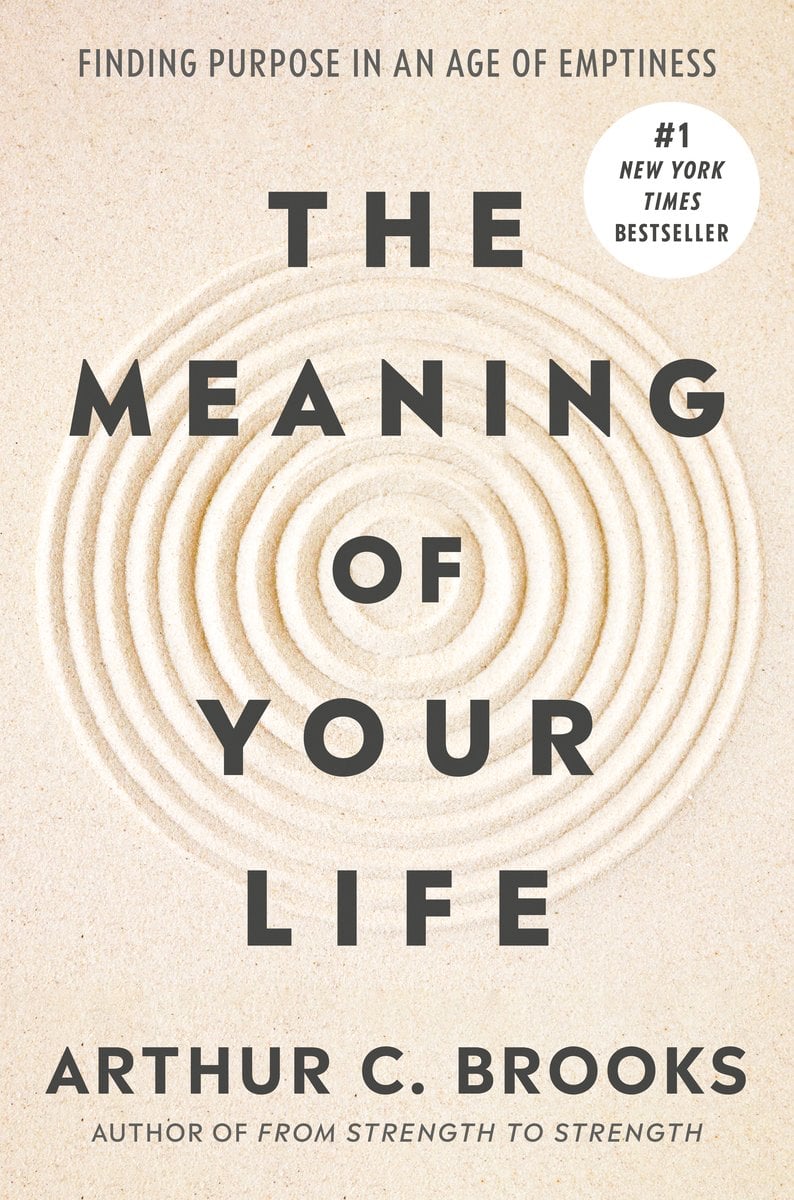
The Meaning of Your Life
Arthur C. Brooks
(Penguin Random House, 2026)
I was familiar with Arthur Brooks from his Atlantic articles and also from having read From Strength to Strength, but my interest in reading The Meaning of Your Life began when I was looking through the introduction and took in the sentence, “As a general rule, the more time you spend looking at your phone, the more depressed, lonely, and anxious you will become.” I was not disappointed and highly recommend this book. Do take time to answer the three questions he raises in Chapter 4:
- ‘Why do things happen the way they do in my life?’
- ‘Why am I moving in this direction?’
- ‘Why does my life matter?’
The book really is about meaning. As a happiness researcher, Brooks offers the following equation: “Happiness= Enjoyment + Satisfaction + Meaning.” Accordingly, “The happiest people enjoy their lives, take satisfaction in their activities and accomplishments and have a sense of meaning. As you might expect, the growing number of people who lack meaning in their lives or cannot seem to find it is perhaps the most significant issue facing behavioral scientists today.”
What follows are highlights and insights that Brooks shares that I hope will motivate you to read the book.
- Psychologists Martela and Steger state, “Meaning=Coherence + Purpose + Significance.” Coherence is “how the events of your life fit together,” purpose is “the existence of goals and direction in your life,” and significance is “knowing that your life matters.”
- In reading the book, you will have the opportunity to complete the “Meaning in Life Questionnaire,” a thoughtful exercise.
- Brooks spends considerable time distinguishing the difference in function between the left and right hemispheres of the brain and presents evidence that “the left side of the brain manages what is clear and straightforward in life—the necessary but prosaic tasks you do all day. The right side deals with what is spiritual, mysterious, and awe-inspiring in life.” The right hemisphere “manages life’s complexity. Complex challenges are easy to understand but impossible to solve, so they can only be lived and understood. This is in contrast to the complicated parts of life (managed by the left hemisphere), which can be hard to understand but are solvable once and for all.”
- Brooks also introduces the idea of the “’doom loop,’ a self-reinforcing cycle where people turn to addictive technologies out of boredom and emptiness” This is clearly a most timely consideration.
- “Nothing can buy you peace but yourself”
- “The arrival fallacy—the assumption that once you hit a goal or reach a destination, the bliss you get will be the best reward ever, and it will last.”
- I like the distinction Brooks makes between “deal friends” and real friends.
- Brooks also talks about love and thinks we are in a “love depression” “True romantic love is harder for many people to find than ever before.”
- Here’s a troubling thought passed along by the author—“When not occupied in a specific task, people spend 95 percent of their time focused on themselves”
- “Reflections on the good of others is an important first step in self-transcendence”
Brooks concludes the book by offering some new rules to live by:
- “If any technology substitutes for in-person experiences, it should be used with extreme caution, like a dangerous and addictive drug.
- If something makes you focus on yourself instead of others, shun it immediately. It is poison.
- If you are afraid of love in real life, it means you need to take more risks with your heart.
- If the material world is crowding out your sense of the supernatural, rebalance your time and priorities.
- If your work is not a calling, no matter what it pays, start plotting your exit.
- If beauty is missing from your life, go outside in nature immediately. Without your phone.
- In the morning, as you start your day, say to yourself in the mirror, ‘The trials I face this day are evidence that I am living my life to the fullest’”
A summary statement:
“Will you fail? Yes, of course—a lot. And I will too. But you will be pointed in the right direction for progress.”